Chinese zodiac compa
What Exactly Is a Chinese Zodiac Compatibility Chart?
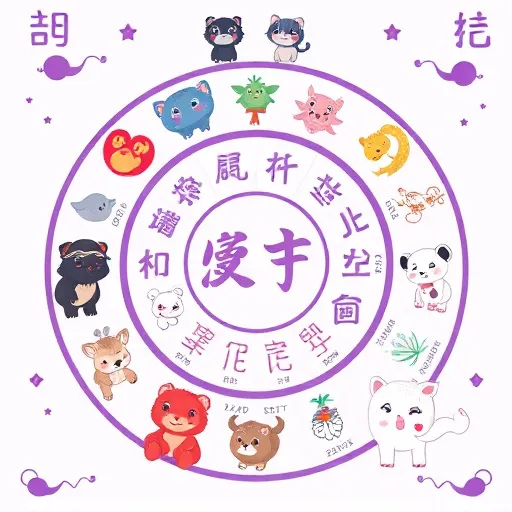
So you've probably heard people talk about how to read your chinese zodiac compatibility chart, and maybe you've even glanced at one of those colorful grids with twelve animals on each side. But what actually is it? At its heart, a Chinese zodiac compatibility chart is a reference tool that maps out the relationships between the twelve animal signs of the Chinese zodiac system. Each animal sign is tied to a birth year, and the chart shows how any two signs interact — whether they click beautifully, butt heads, or land somewhere in that murky middle ground.
Here's where most beginners get tripped up, though: the animals are only part of the picture. A proper Chinese zodiac compatibility chart also factors in the Five Elements (Wood, Fire, Earth, Metal, and Water), the yin-yang polarity, and sometimes the Inner Animal that comes from your birth month. A well-constructed chart layers all these dimensions together, which is exactly why a lazy "Rat and Horse just don't get along" summary barely scratches the surface. When you really dig into how to read your chinese zodiac compatibility chart, you start seeing that it's a multi-layered system, not a one-note verdict.
Think of it like reading a weather map. You could just look at the big sun icon and call it a day, but understanding the pressure systems and wind patterns gives you a way more accurate forecast. Same principle applies here — the more layers you understand, the better your read on how to read your chinese zodiac compatibility chart with real confidence.
Locating Your Animal Sign and Your Partner's Sign on the Chinese Zodiac Wheel
The first thing you need to do is identify your own animal sign and the sign of the person you're analyzing compatibility with. If you already know your sign, great. If not, you'll need your birth year — but be careful, because the Chinese zodiac year doesn't start on January 1st. It typically kicks off on the Lunar New Year, which falls somewhere between late January and mid-February.
This is a crucial detail that catches a ton of people off guard. If you were born in January or early February, your zodiac sign might actually belong to the previous year. Always double-check against a lunar calendar converter before you start reading the chart. Getting this wrong means you'll be analyzing the wrong row and column entirely — and that throws off everything downstream. It's honestly the single most common mistake people make when learning how to read your chinese zodiac compatibility chart.
Once you've confirmed both signs, find your animal on one axis of the chart (usually the vertical column) and the other person's animal on the other axis (usually the horizontal row). The cell where they intersect gives you the basic compatibility rating. Simple enough, right?
The Twelve Animal Signs and Their Personality Profiles at a Glance
- Rat — quick-witted, resourceful, adaptable
- Ox — steady, dependable, methodical
- Tiger — bold, competitive, courageous
- Rabbit — gentle, diplomatic, refined
- Dragon — confident, ambitious, charismatic
- Snake — intuitive, strategic, mysterious
- Horse — energetic, free-spirited, sociable
- Goat — creative, empathetic, easygoing
- Monkey — clever, versatile, playful
- Rooster — observant, hardworking, precise
- Dog — loyal, honest, protective
- Pig — generous, sincere, optimistic
Knowing these personality profiles helps you interpret why certain pairings work and others struggle. The chart tells you the "what" — the personality traits tell you the "why." And honestly, that "why" is where how to read your chinese zodiac compatibility chart goes from a parlor trick to a genuinely useful reflection tool.
Understanding the Four Relationship Categories in Chinese Zodiac Compatibility
Most compatibility charts organize results into four broad categories. Learning to recognize these will instantly make the chart more readable — and it's a core part of how to read your chinese zodiac compatibility chart without getting overwhelmed.
Harmonious Pairs and Secret Friends: The Best Zodiac Matches
Every sign has one or more "secret friend" or trine partners — signs that sit 120 degrees apart on the zodiac wheel. These pairings tend to flow naturally, with mutual understanding and low friction. For example, Rat pairs beautifully with Dragon and Monkey. Ox harmonizes with Snake and Rooster. Tiger clicks with Horse and Dog. Rabbit aligns with Goat and Pig. These combinations typically score highest on any zodiac compatibility chart.
Complementary Pairs and Opposites Attract: The Growth Matches
These are signs that balance each other out — often opposites on the wheel. They may not be effortless, but they offer tremendous growth potential. Think of them as the classic "opposites attract" category. A reserved sign matched with an expressive one, or a planner matched with a spontaneous spirit. The chart usually flags these as moderate-to-good compatibility, and in real life, these pairings often produce the most dynamic relationships. This is one of those nuances that makes how to read your chinese zodiac compatibility chart so rewarding once you get it.
Neutral Pairs and Wildcard Matches: The Middle Ground
Some intersections in the chart simply read "neutral" or "average." This doesn't mean doomed — it means the relationship's success depends largely on communication, shared values, and effort rather than natural astrological synergy. Treat neutral as a blank canvas rather than a red flag.
Clashing Pairs and Conflict Signs: The Challenging Matches
These are the signs that sit directly opposite each other on the wheel — the famous clash relationships. Rat clashes with Horse. Ox clashes with Goat. Tiger clashes with Monkey. Rabbit clashes with Rooster. Dragon clashes with Dog. Snake clashes with Pig. These pairings often require more conscious effort and compromise. But here's the important nuance: a clash is not a curse. Plenty of clashing pairs enjoy long, fulfilling relationships. The chart is flagging friction points, not predicting failure. Knowing how to read your chinese zodiac compatibility chart means reading a clash as a conversation starter, not a death sentence.
Reading the Five Elements Layer in Your Chinese Zodiac Compatibility Chart
This is where your chart gets genuinely sophisticated — and where most casual readers stop. Don't be one of them. The element layer is arguably the most valuable part of the analysis, and it's what separates a surface-level reading from a real one.
Each zodiac sign is associated with a fixed element, but each birth year also carries its own element, cycling through Wood, Fire, Earth, Metal, and Water every two years. So a person can be a "Wood Dragon" or a "Fire Dragon" — same animal, very different energetic signature. When you're figuring out how to read your chinese zodiac compatibility chart properly, this layer is non-negotiable.
When reading your chart, look for the element notes accompanying each sign. Here's the quick interpretation guide:
- Wood signs pair well with Fire and Water elements; they can feel restricted by Metal
- Fire signs thrive with Wood and Earth; Water can feel dampening
- Earth signs harmonize with Fire and Metal; Wood can feel disruptive
- Metal signs resonate with Earth and Water; Fire creates tension
- Water signs flow with Metal and Wood; Earth can feel confining
When both people's natal elements support each other in the chart, that's a strong positive signal. When they conflict, it's a prompt to pay attention to how you handle stress and decision-making together.
The Yin-Yang Polarity Check for Balanced Zodiac Relationships
Each sign is also classified as either yin or yang. Odd-numbered signs (Rat, Tiger, Dragon, Horse, Monkey, Dog) are yang; even-numbered signs (Ox, Rabbit, Snake, Goat, Rooster, Pig) are yin. Charts often note polarity, and the general rule is that yin-yang pairings create natural balance, while same-polarity pairings can either amplify each other beautifully or create competition — it depends on the individuals. Either way, polarity is a layer you shouldn't skip when learning how to read your chinese zodiac compatibility chart.
The Triangle of Affinity and Zodiac Harmony Groups
Advanced charts highlight what's called the Triangle of Affinity — groups of three signs that share a natural bond. These triangles are:
- Rat, Dragon, Monkey — the visionary triangle
- Ox, Snake, Rooster — the builder triangle
- Tiger, Horse, Dog — the pioneer triangle
- Rabbit, Goat, Pig — the harmonizer triangle
If you and your partner fall within the same triangle, your chart will likely show strong compatibility. If you're in different triangles, don't panic — cross-triangle relationships are extremely common and often work wonderfully, just with different rhythms and needs. This is a big part of how to read your chinese zodiac compatibility chart without freaking out over every mismatch.
Interpreting Scores, Symbols, and Chinese Terms Like San He and Liu He
Different charts use different scoring systems. Some use percentage scores, some use star ratings, some use color coding, and some use traditional Chinese terminology like San He (three harmonies) or Liu He (six harmonies). Here's a translation cheat sheet:
- Liu He (Six Harmonies) — the highest compatibility tier; natural, easy rapport
- San He (Three Harmonies) — strong compatibility; shared values and goals
- Neutral / Average — workable with effort and awareness
- Chong (Clash) — friction-heavy; requires conscious communication
- Hai (Harm) — subtle misunderstandings; patience is key
When you see a percentage score, treat it as a relative indicator rather than an absolute verdict. A 70% match in one chart might correspond to a completely different raw number in another system. What matters is the ranking within the same chart, not the number itself. That's a subtle but important point in how to read your chinese zodiac compatibility chart accurately.
Common Mistakes When Reading Chinese Zodiac Compatibility Charts
Before we wrap up, let's address the traps that catch most first-time readers.
Ignoring Birth Time, Month, and the Four Pillars Reading
A basic chart only uses your birth year. But a fuller analysis — sometimes called a Four Pillars reading — incorporates your birth month, day, and hour. If your chart includes these columns, don't skip them. The year pillar alone tells only a fraction of the story.
Treating Clashes as Dealbreakers in Zodiac Compatibility
We can't emphasize this enough. A "clash" in the chart identifies where friction is likely, not whether a relationship can succeed. Some of the most durable partnerships involve so-called clashing signs, precisely because both people learned to navigate their differences early.
Overlooking Element Interactions and Compatibility Layers
Two "compatible" animals with clashing elements can actually experience more friction than a "clashing" animal pair with harmonious elements. Always read both layers together when you're working through how to read your chinese zodiac compatibility chart.
Using the Wrong Birth Year and Lunar Calendar Errors
We mentioned this earlier, but it bears repeating: if you were born in January or February, verify your sign against a lunar calendar. It's the single most common reading error out there.
Putting It All Together: A Quick Reading Workflow for Zodiac Compatibility
Here's the five-minute process you can apply to any Chinese zodiac compatibility chart:
- Confirm both birth years using a lunar calendar
- Locate the intersection of the two animal signs
- Note the base rating — harmonious, complementary, neutral, or clashing
- Check the element layer for both signs and see if they support or challenge each other
- Confirm polarity — yin-yang balance or same-polarity dynamics
- Read the qualitative notes attached to that intersection in your specific chart
That's it. Six steps, and you've extracted everything a standard chart has to offer. Anything beyond that — such as a full Four Pillars analysis — requires professional interpretation and goes well beyond what a chart alone can tell you. Once you've got this workflow down, how to read your chinese zodiac compatibility chart becomes second nature.
A Final Word on Perspective and Zodiac Compatibility Analysis
Compatibility charts are tools for reflection, not verdicts. They highlight tendencies, flag potential friction points, and offer a vocabulary for discussing differences. What they cannot do is account for individual personality, life experience, communication skills, or the simple fact that people change over time.
Use your chart as a conversation starter. If it flags a clash area, talk about it. If it highlights a harmony, celebrate it. The most valuable insight you'll get from any zodiac compatibility analysis isn't a score — it's a better understanding of how you and the people around you are wired. And honestly, that's what makes the whole exercise worthwhile. So go ahead — pull up that chart, follow the steps above, and see what it has to say. You might be surprised by how much clarity a few well-organized rows and columns can bring, and how to read your chinese zodiac compatibility chart will suddenly feel like second nature.