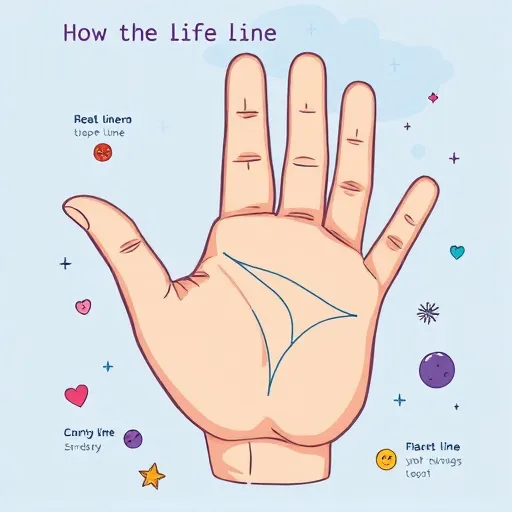
Basic guide to palm
What Is the Life Line, Exactly? A Friendly Guide to Palm Reading Basics
So you want to learn how to read the life line on your palm? Great choice. Let's start with the basics before we get into the fun stuff. The life line is one of the three major palm lines — right up there with the head line and the heart line. It usually kicks off somewhere between your thumb and index finger, then curves down and around the fleshy base of your thumb (that padded area is called the Mount of Venus in palmistry lingo), sweeping toward your wrist.
In palmistry tradition, this line gets linked to vitality, life energy, major transitions, and overall physical well-being. And here's the big one — despite what almost everyone seems to think, it has nothing to do with how long you'll live. That myth needs to die, honestly. A short life line does not mean a short life. Pretty much every contemporary palm reader out there will tell you the same thing, and even longtime skeptics who've studied the craft agree. When you learn how to read the life line on your palm, you're really learning to interpret a symbolic indicator of how you move through life — your energy rhythms, your resilience, and the chapters you pass through along the way.
A Quick Reality Check on Palmistry Perspective and Symbolic Meaning
Before we dive deeper into how to read the life line on your palm, let's set some expectations. Palmistry is a tradition built on observation and symbolism — it's not a medical diagnosis or a scientific tool. Anyone approaching this in 2026 treats it as a self-exploration and cultural practice that can spark useful questions about your habits and mindset. It's absolutely not a substitute for professional health advice, and no responsible palm reader would ever frame it that way.
Step-by-Step: How to Read the Life Line on Your Palm Like a Pro
Ready to actually try this at home? Here's a practical sequence for how to read the life line on your palm that anyone can follow.
Step 1: Pick the Right Hand for Your Palm Line Reading
Traditional palmistry has a general rule: your non-dominant hand shows inherited traits and early-life patterns, while your dominant hand reflects your current trajectory and choices. Plenty of practitioners read both and compare — honestly, that's the most insightful approach when figuring out how to read the life line on your palm. Right-handed? Your left hand is often the "potential" hand and your right is the "active" one. Lefties flip that.
Step 2: Get Good Lighting and a Relaxed Palm for Accurate Reading
Sounds basic, but it seriously matters. Natural light reveals the finer details — faint branches and skin texture included. Keep your hand relaxed; don't splay your fingers or clench up. A relaxed palm shows the line in its truest shape. A magnifying glass helps catch subtle details, and lots of beginners find it useful to photograph the palm and zoom in.
Step 3: Locate the Life Line and Mount of Venus
Find the arc starting between your thumb and index finger and sweep around the fleshy base of the thumb — that's the Mount of Venus. Trace it from its starting point down toward the wrist. That's your life line. Simple as that.
Step 4: Analyze Key Features — Length, Depth, Curve, and Branches
Now the fun part. When learning how to read the life line on your palm, palm readers examine several characteristics:
- Length: A long, sweeping line is traditionally tied to sustained energy and a steady life rhythm. A shorter line isn't negative — it's often read as focused, intense energy or a life that changes direction meaningfully.
- Depth: A deep, well-defined line suggests strong vitality and clarity of purpose. A faint line can point to sensitivity or fluctuating energy levels.
- Curve: A wide, generous curve around the thumb links to warmth, sociability, and physical stamina. A line hugging close to the thumb sometimes reads as a more reserved, inward-focused temperament.
- Continuity: An unbroken line suggests steadiness. Breaks, gaps, or overlapping segments traditionally mean transitions, changes of direction, or periods of re-evaluation.
- Branches: Small lines branching off get read various ways — upward branches often relate to ambition or outward growth, while downward ones may point to introspection or energy dips.
- Chains and islands: A "chained" line (looking like tiny links) or enclosed loops called islands are traditionally associated with periods of stress or complexity. Symbolic, not diagnostic — always.
Step 5: Cross-Reference With the Head Line and Heart Line
No line exists in isolation. Skilled readers always read the life line in context with the head line (thinking and intellect) and the heart line (emotion and relationships). The intersections and spacing between these palm lines add nuance. For example, where the head line and life line meet at the start is often discussed in terms of independence and early influences. This cross-referencing step is essential when mastering how to read the life line on your palm.
Common Life Line Interpretations, Decoded for Modern Readers
Let's translate the most frequently discussed life line patterns into plain language. Keep in mind that interpretations vary between schools of palmistry, and a good reader treats them as conversation starters, not verdicts.
The Deep, Unbroken Arc and Strong Vitality Reading
This is the classic "strong vitality" reading — steady energy, physical resilience, and a grounded approach to life. People with this pattern are often described as dependable and consistent.
The Faint or Thin Line and Sensitivity Signals
Don't panic if your line is on the delicate side. Faint lines commonly read as sensitivity — to environments, other people's energy, to stress. Many readers frame this as a nudge to prioritize rest and boundaries.
Breaks, Gaps, and Major Life Transitions
A break in the line is one of the most misunderstood features. It's traditionally interpreted as a major life transition — a career shift, a relocation, a period of personal reinvention — rather than anything ominous. Overlapping segments read similarly: one chapter ending as another begins.
Upward Branches and Ambition Growth Indicators
Upward branches often link with ambition, achievement, and moments of growth. Some readers associate them with positive turning points or recognition.
The Chained Line and Stress Period Guidance
If your line looks braided or linked, traditional readings connect it to periods of scattered energy or stress. Modern practitioners frame this gently — as encouragement to build routines that support steadiness.
What the Life Line Is NOT — Myths and Misconceptions
This section might be the most important one, so let's be direct about how to read the life line on your palm without falling into traps:
- It does not predict lifespan. This is the single biggest myth in palmistry. Line length has no established connection to longevity.
- It is not a health diagnosis. No line on your hand can tell you about a medical condition. If you have health concerns, consult a qualified professional — full stop.
- It is not fixed destiny. Even within palmistry tradition, lines are understood to shift subtly over time as habits and circumstances change. Many readers describe the palm as a living document.
A responsible 2026 approach treats palmistry as a mirror for reflection, not a crystal ball. The value is in the questions it sparks: Are you pacing yourself? What transitions are you navigating? Where could you use more resilience? That's the real payoff of learning how to read the life line on your palm.
How Modern Palm Readers Approach Palmistry in 2026
The field has evolved big time. Today's palmistry community — a mix of cultural historians, hobbyists, and wellness-oriented practitioners — emphasizes a few key principles.
Context Over Absolutes in Palm Line Interpretation
Rather than declaring "this line means X," modern readers frame interpretations as possibilities and conversation starters. The palm becomes a tool for self-inquiry, not a rulebook. This shift has completely changed how to read the life line on your palm for a new generation.
Both Hands, Always — Dominant and Non-Dominant Comparison
Comparing the dominant and non-dominant hands is now standard practice. The contrast between the two is often more revealing than either hand alone.
Ethical Framing and Responsible Palm Reading Practices
Respectful practitioners avoid fear-based readings. They don't tell people their line predicts illness or misfortune. Instead, they focus on themes like energy management, transition, and personal growth — and they're transparent that the practice is symbolic.
Integration With Mindfulness and Self-Awareness Practices
Many contemporary readers pair palm analysis with reflective practices — journaling, goal-setting, or simply pausing to think about life patterns. In that sense, reading your life line has become less about fortune-telling and more about self-awareness. That's the modern answer to how to read the life line on your palm — it's a mindfulness exercise as much as anything.
Practical Tips for Beginners Learning Palm Reading
If you're just getting started with how to read the life line on your palm, here are pointers that'll make your readings clearer and more enjoyable:
- Practice on multiple hands. Reading friends' and family members' palms (with permission!) helps you recognize pattern variations quickly.
- Keep notes. Sketch or photograph palms and jot down observations. Over time, you'll develop an eye for subtle differences.
- Learn the vocabulary, then loosen up. Terms like mounts, branches, and islands are useful scaffolding — but don't let jargon overwhelm the actual observation.
- Stay humble and curious. The best readers present interpretations as invitations to reflect, not as facts.
- Cross-reference traditions. Different cultural traditions read the palm differently. Exploring more than one perspective deepens your understanding of how to read the life line on your palm.
The Bottom Line on Reading Your Life Line
Learning how to read the life line on your palm is really an exercise in observation and interpretation. The line wrapping around your thumb is a symbol-rich feature of palmistry tradition — one linked to vitality, transitions, and the rhythm of your life journey. Read it with curiosity, cross-reference it with the head line and heart line, compare both hands, and treat every interpretation as a prompt for reflection rather than a prediction.
And remember the golden rule of modern palm reading: the life line tells a story about how you live — not how long. Approach how to read the life line on your palm with that mindset, and you'll find the practice genuinely rewarding, whether you're reading your own palm at the kitchen table or swapping readings with friends on a lazy afternoon. Happy reading — your hands have plenty to say.