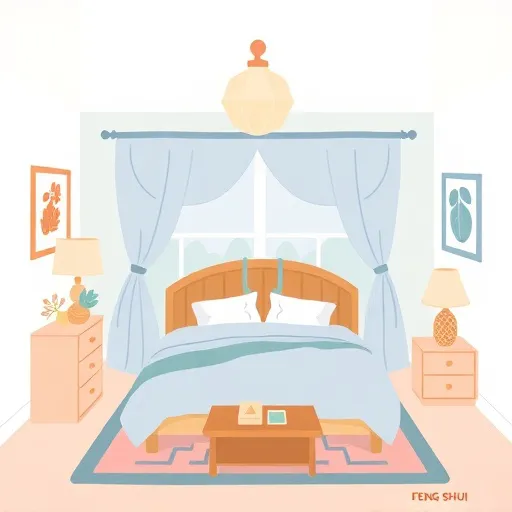
Feng shui as ancient
Why Feng Shui Still Matters in a Hyper-Connected World
So here's the deal. Feng shui is basically an ancient environmental psychology framework — long before anyone had a word for that. It's all about how energy (or chi) moves through a space and how that flow quietly shapes the people living in it. And modern neuroscience has pretty much backed up what feng shui practitioners have been saying for centuries: your physical environment directly influences your stress response, your cortisol levels, and your sleep quality. That's exactly why feng shui bedroom layout rules for better sleep aren't some woo-woo relic — they're a practical toolkit.
Fast forward to 2026. Remote work has blurred the line between "office" and "home," and smart devices have crept into every corner of our living spaces. The bedroom has become one of the last true sanctuaries we've got left. Protecting that sanctuary through intentional layout isn't mystical — it's self-preservation. A bedroom designed with solid feng shui bedroom layout rules for better sleep can dial down anxiety, boost sleep quality, and even support better energy flow throughout your whole home.
Ancient Environmental Psychology Meets Modern Sleep Science
Think about it this way: feng shui has always been about balance and grounding, and modern sleep research keeps arriving at the same conclusions. The feng shui bedroom layout rules for better sleep you'll read about below aren't arbitrary traditions — they map almost perfectly onto what sleep science tells us about circadian rhythm, relaxation, and stress reduction. When you apply feng shui bedroom layout rules for better sleep consistently, you're essentially designing a room that works with your biology instead of against it.
The Command Position: The Single Most Important Bed Placement Rule
If you take nothing else away from this article, take this: the position of your bed matters more than almost anything else, and it's the first of the feng shui bedroom layout rules for better sleep you should master. In feng shui, this is called the command position — and it's non-negotiable.
The command position means your bed sits so you can see the bedroom door from where you lie, but you're not directly in line with it. Think of it as the "seat of power" in the room. You want to feel safe, secure, and in control — not vulnerable or easily startled. Again, this is one of those feng shui bedroom layout rules for better sleep that sounds spiritual but is really about your nervous system.
Here's what the command position looks like in practice:
- Diagonal placement: The ideal spot is diagonally across from the door, giving you a clear view of the entrance without being directly in its path.
- Solid headboard wall: Your headboard should rest against a solid wall — not a window, not a shared wall with a noisy bathroom, and definitely not a wall with a large mirror hanging on it.
- Avoid the "coffin position": That's when your feet point directly out the door. In feng shui tradition, this is associated with depletion and a lack of protective energy. Even from a purely psychological standpoint, sleeping with your feet toward an open doorway can feel unconsciously exposed.
Why does this matter for sleep quality? Because your brain is constantly scanning the environment for threats, even when you're unconscious. When your bed is in the command position, that subtle background anxiety quiets down. You feel grounded and secure — the foundation of deep, uninterrupted sleep. Of all the feng shui bedroom layout rules for better sleep, this one delivers the biggest payoff.
Balance the Elements: Yin and Yang Energy in the Bedroom
Feng shui is all about balance — specifically, the interplay between yin energy (calm, passive, cool, dark) and yang energy (active, bright, warm, stimulating). And here's where most modern bedrooms get it completely wrong: they're way too yang. This is where feng shui bedroom layout rules for better sleep earn their keep.
Think about it. Your bedroom probably has a television, a charging station, maybe a home office setup in the corner. Your phone is on the nightstand. There's a smart speaker blinking at you. All of that is yang energy — stimulating, activating, and completely counterproductive to relaxation.
To cultivate yin energy and put these feng shui bedroom layout rules for better sleep to work:
- Choose calming colors: Soft blues, warm neutrals, muted greens, and gentle earth tones promote relaxation. Avoid bright reds, oranges, and aggressive patterns that keep your nervous system on high alert.
- Layer your lighting: Overhead fluorescent lighting is the enemy of good sleep. Use warm, dimmable lamps with soft bulbs, and keep lighting low and warm in the evening to support natural melatonin production.
- Remove electronics: If you can't remove them entirely, at least keep them out of arm's reach and cover any blinking lights. The EMF debate is still ongoing, but the psychological impact of a glowing screen in your peripheral vision is undeniable.
- Use soft textures: Natural fabrics like cotton, linen, and wool create a sense of comfort and grounding. Think plush rugs, layered bedding, and cozy throws.
In 2026, with smart home technology everywhere, the key is to use it intentionally. Program your smart lights to shift to warm, dim tones after sunset. Use automated blinds to create a dark, cave-like environment for sleep. The goal is to make your bedroom feel like a cocoon — a restful sanctuary that signals to your body it's time to wind down. Follow these feng shui bedroom layout rules for better sleep, and your room basically does the work for you.
Clutter, Energy Flow, and the Art of a Restful Sanctuary
One of the most powerful — and most overlooked — of all feng shui bedroom layout rules for better sleep is this: clutter blocks energy flow. And blocked energy flow in the bedroom translates directly to restless sleep, mental fog, and a lingering sense of unease.
Now, I'm not saying your bedroom needs to look like a minimalist showroom. But there's a difference between "lived-in" and "chaotic." Your subconscious brain knows the difference, even if your conscious brain has stopped noticing that pile of laundry on the chair.
Practical decluttering tips that double as feng shui bedroom layout rules for better sleep:
- Clear under the bed: This is a big one in feng shui. Storing boxes, shoes, and random junk under your bed creates stagnant energy right beneath where you sleep. If you need the storage, keep it organized and limited to soft items like extra bedding.
- Keep surfaces clear: Nightstands should hold only what you truly need — a lamp, a book, maybe a glass of water. Every item is something your brain registers as "to-do" energy.
- Handle the "chairdrobe": You know the chair. The one covered in clothes. Find a designated spot for worn clothes — a hamper, a hook, a drawer — so the chair stays clear.
- Limit work materials: If you work from home, keep your desk out of the bedroom, or at least cover your work materials at the end of the day. Your bedroom should be associated with rest, not deadlines.
When you clear the clutter, you create space for energy flow to move freely through the room. And when energy flow moves freely, so does your sleep. That's the magic of these feng shui bedroom layout rules for better sleep — they're as much about psychology as tradition.
Mirrors, Headboards, and Other Bedroom Anchors That Shape Your Sleep
This one surprises a lot of people. In feng shui, mirrors in the bedroom are generally considered problematic — and that's one of the feng shui bedroom layout rules for better sleep folks most often skip. Why? Because mirrors are believed to reflect energy, amplify it, and disrupt the calm, yin atmosphere you're trying to create. More practically, mirrors can be startling — catching movement in your peripheral vision and activating your stress response when you're trying to fall asleep.
- Avoid facing the bed: A mirror directly facing or above the bed is a big feng shui no-no. It's said to invite restless energy and even nightmares. Cover it at night if you can't move it.
- Consider alternative wall art: If you're using a mirror for decoration, swap it for calming artwork or a textile piece that promotes relaxation.
- Be mindful of closet doors: Full-length mirrored closet doors that face the bed should be avoided or covered at night.
Now let's talk about your headboard — because in feng shui, it represents stability, support, and your foundation. A solid, well-anchored headboard is considered essential for a good night's sleep, and it's a cornerstone of the feng shui bedroom layout rules for better sleep.
- Choose solid materials: Wood, upholstered fabric, or metal — as long as it's sturdy. Avoid open-frame headboards with large gaps, which are thought to offer weak support.
- Attach it to the wall: A headboard firmly attached to the bed frame and positioned against the wall creates a sense of security and grounding.
- Avoid headboards with shelves or storage: These can create mental clutter and a feeling of being "surrounded" while you sleep.
Then there's bed placement itself, which varies by room. In small bedrooms, the command position can be tricky — place the bed against the wall opposite the door, headboard on a solid wall, with a clear sightline to the entrance. Avoid corners when you can, since corners represent stagnant energy in feng shui; if you must use one, balance it with a plant or soft lamp on the open side. In large bedrooms, resist the urge to shove the bed against a far wall — that diagonal door view still matters, so use rugs to visually anchor the bed and define a sleep zone, and avoid placing the bed under a window. And if you've got an en suite bathroom, keep that door closed at all times, since bathrooms are associated with draining energy and water element imbalance; a small rug or mat between bed and bathroom door creates an energetic buffer. Together, these feng shui bedroom layout rules for better sleep cover almost every floor plan you'll run into.
Color Psychology, the Five Elements, and Bringing Life Into the Room
Feng shui uses the five elements — wood, fire, earth, metal, and water — to create balance. In the bedroom, the goal is to emphasize calming elements while minimizing stimulating ones. This is where feng shui bedroom layout rules for better sleep get colorful, literally.
- Earth tones (beige, warm brown, terracotta): Promote grounding and stability. Great for bedding and walls.
- Water tones (soft blue, gray, charcoal): Encourage relaxation and introspection. Ideal for accents.
- Wood tones (green, natural wood furniture): Support growth and calm. A healthy indoor plant can work wonders.
- Metal tones (white, silver, gray): Use sparingly for clarity — too much metal energy can feel cold or rigid.
- Fire tones (red, orange, bright pink): Use very sparingly. A small accent pillow is fine, but avoid fire-dominant colors in large doses.
When you choose colors that align with your desired energy flow, the room naturally supports the kind of rest you're after. And feng shui loves plants — not just for aesthetics. Plants represent the wood element, supporting growth, vitality, and a connection to nature. A well-chosen plant can improve air quality, add softness, and contribute to grounding and calm. A few guidelines: choose low-maintenance plants (a wilting plant signals stagnant energy — think snake plant, ZZ plant, or pothos), avoid sharp or spiky plants (pointed leaves create "poison arrows," sharp energy that's disruptive to sleep — go for soft, rounded foliage), and don't overcrowd (one or two plants are plenty; a jungle vibe is great for a living room, not so great for sleep).
Pairing Feng Shui Bedroom Layout Rules for Better Sleep With Modern Sleep Science
Here's the beautiful thing about feng shui bedroom layout rules for better sleep — they align remarkably well with what modern sleep science tells us. The command position reduces hypervigilance. Removing electronics supports melatonin production. Decluttering reduces cognitive load. Soft, warm lighting aligns with your circadian rhythm. Calming colors activate the parasympathetic nervous system. Every one of these feng shui bedroom layout rules for better sleep has a real-world mechanism behind it.
In 2026, we have more data than ever about what disrupts sleep — blue light exposure, noise pollution, ambient stress, emotional clutter. And feng shui offers a time-tested framework for addressing all of it through design. It's not about superstition. It's about creating an environment that works with your biology, not against it. If you're a seasoned pro in interior design or wellness, you've likely already noticed this convergence. And if you're just trying to get better sleep, the good news is that these feng shui bedroom layout rules for better sleep are practical, affordable, and deeply effective.
At the end of the day, feng shui bedroom layout rules for better sleep are about one thing: intention. It's about creating a space that actively supports your well-being rather than passively letting it suffer. Whether you're rearranging your bed into the command position, clearing out the clutter under your bed, or simply swapping harsh overhead lighting for a warm bedside lamp, every small change sends a signal to your brain that this space is safe, calm, and designed for rest. And in a world that's increasingly demanding, loud, and connected at all hours, that intention matters more than ever. Your bedroom should be a place where you don't just sleep — it should be a place where you truly rest, recharge, and restore. So go ahead. Move the bed. Clear the nightstand. Cover the mirror. Trust me — your future, well-rested self will thank you.